
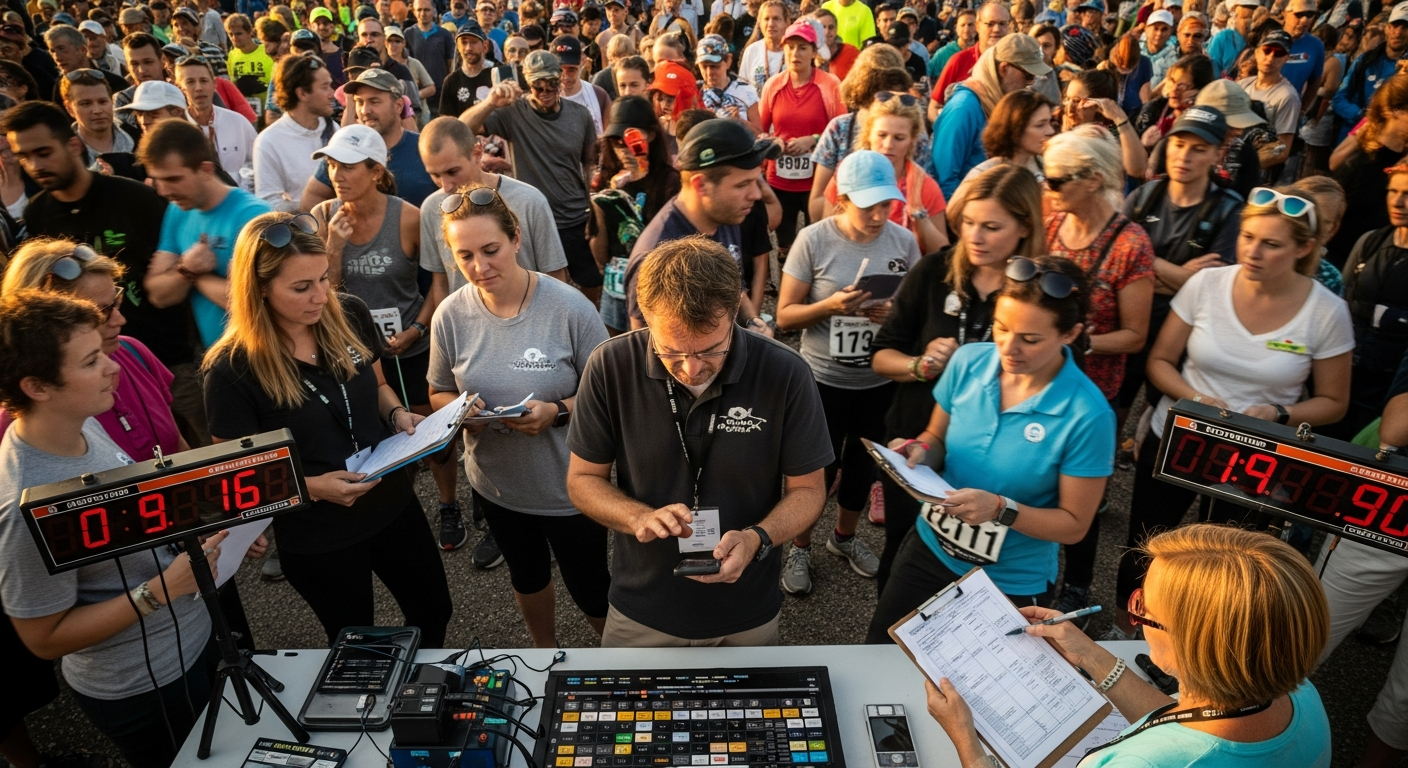
Every race director knows the scene. It's 5:45 AM, the transition area is buzzing, and your phone is already blowing up. "Where do I park?" "What wave am I in?" "My wife can't find the spectator area." You have 2,000 athletes, 3,000 spectators, and 200 volunteers - all asking questions at once.
You built a beautiful event app. You promoted it for weeks. And on race morning, maybe 12% of your audience actually downloaded it.
This is the communications gap that race directors across the endurance sports industry are starting to solve - not with better apps, but by meeting people where they already are: their text messages.
The App Download Problem in Endurance Sports
Let's be honest about the numbers. Even the most well-promoted race apps struggle to break 20% adoption among registered athletes - and spectator adoption is far worse, often below 5%. That means the vast majority of people at your event on race day are operating blind.
The reason isn't that your app is bad. It's that the friction of downloading an app for a single-day event is fundamentally mismatched with how people actually behave.
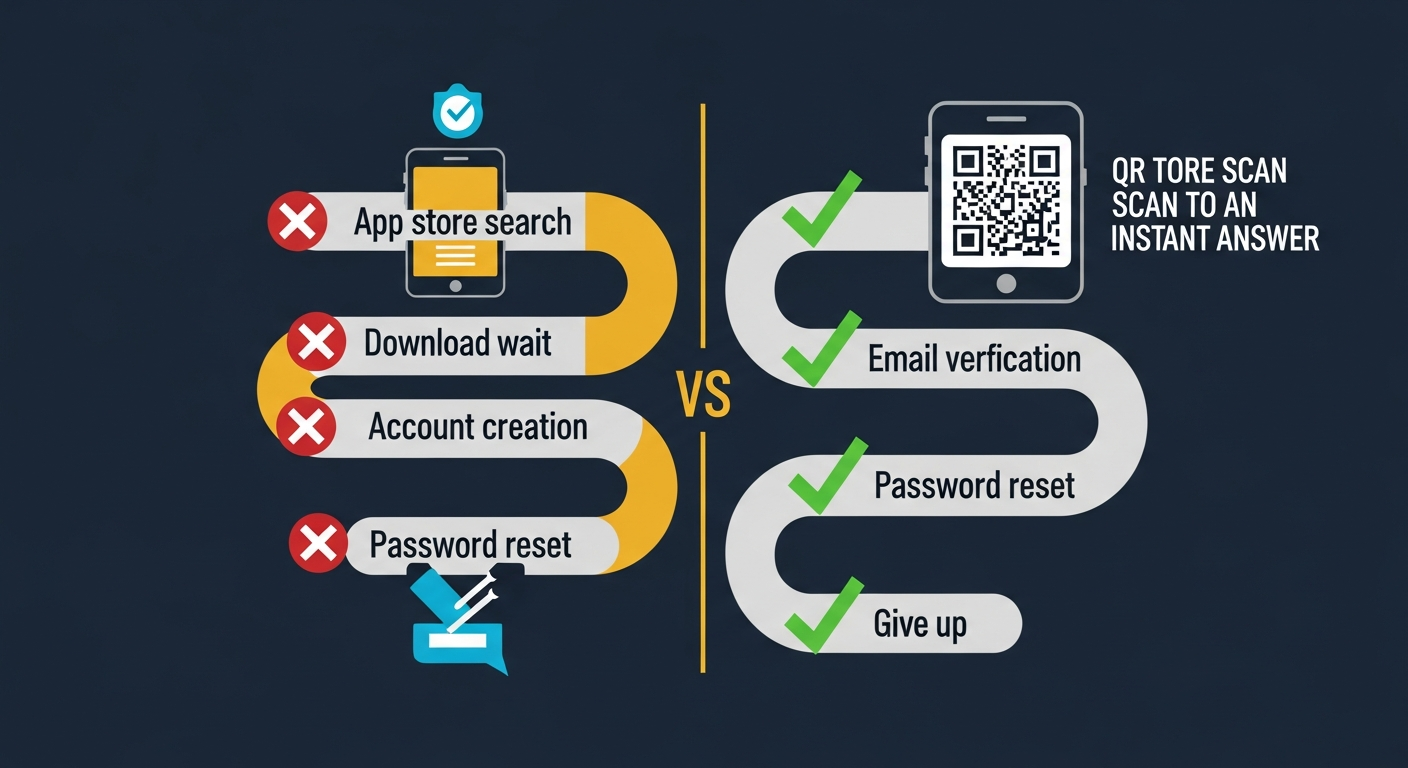
Consider what you're asking a spectator to do: find the app in their store, download it (often on spotty cellular at an outdoor venue), create an account, verify their email, navigate an unfamiliar interface - all while trying to find a parking spot at 6 AM. Compare that to scanning a QR code on a course sign and immediately getting a text with the info they need.
SMS messages have a 98% open rate and are typically read within 3 minutes. Event app push notifications? Around 20% open rate - and that's only among the fraction who downloaded your app in the first place. For time-sensitive race day information, the math isn't even close.
The Three Audiences Race Directors Forget
Most race communication plans focus almost exclusively on registered athletes. But on event day, there are three distinct audiences with very different information needs:
1. Athletes (The Prepared Audience)
Athletes are your most engaged group. They've read the athlete guide, they know their wave time, and they've studied the course map. But even prepared athletes have last-minute questions: "Is the water temperature wetsuit-legal?" "Did the bike course change due to construction?" "Where is body marking?" An SMS system handles these repetitive questions instantly, freeing your staff for the issues that actually need human judgment.
2. Spectators (The Forgotten Audience)
This is where most events drop the ball. Spectators are the emotional backbone of race day - they drove hours, they're standing in the rain, and they desperately want to know where to see their athlete. Yet most events provide zero proactive communication to spectators. A spectator who can text "Where can I see my wife at mile 8?" and get an instant answer with a map link becomes a fan of your event brand, not just a bystander.
3. Volunteers (The Operational Backbone)
Volunteers need operational updates: "Water station 3 is running low on cups" or "The bike-to-run transition is backing up." These communications are time-critical and safety-adjacent. Asking volunteers to check an app while they're handing out water bottles at mile 14 is unrealistic. A text message that appears on their lock screen is not.
How the Communication Switchboard Model Works
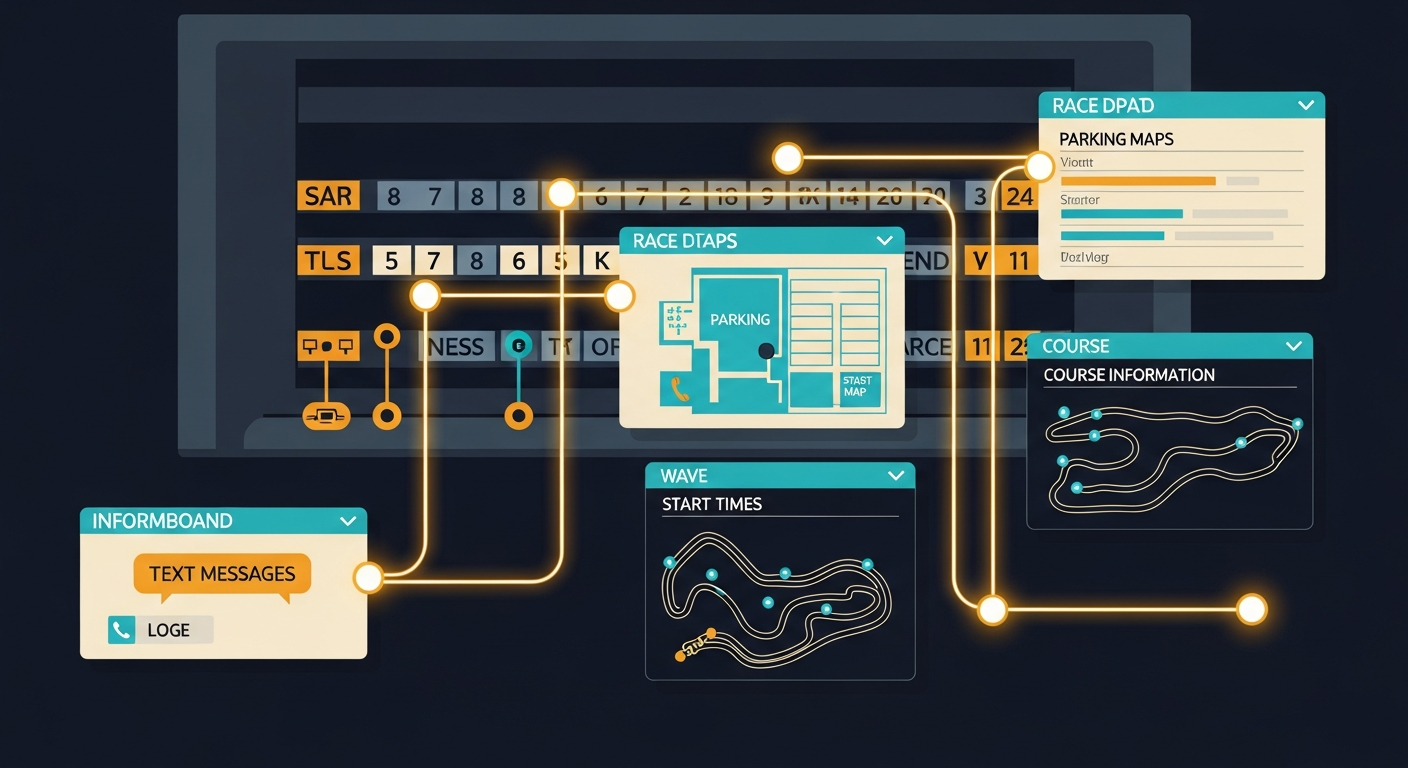
Think of SMS-first event communication like a modern switchboard. Every incoming text gets intelligently routed:
- Knowledge-base questions ("Where do I park?", "What time does the swim start?") get instant automated answers pulled from your event details - no staff intervention needed.
- Operational issues ("There's a pothole on the bike course at mile 6") get flagged and routed to the right team lead.
- Personal questions ("Can I switch from the Olympic to the Sprint?") get escalated to a human with full context, so your team can respond quickly without asking "Which event are you registered for?" five times.
The key insight is that 80% of race-day questions fall into a handful of categories. Parking, spectator viewing, course changes, results, and lost-and-found account for the vast majority. Automate those, and your staff can focus on the 20% that actually requires human judgment and empathy.
Race directors who've adopted SMS-first communication report a 40-60% reduction in volunteer-handled questions on race day. That's not just efficiency - it's the difference between your lead volunteer being available to handle a medical situation versus being stuck explaining the parking map for the 50th time.
The QR Code Strategy That Actually Works
The secret to high SMS adoption at races isn't marketing - it's placement and timing. Here's what top race directors are doing:
- Packet pickup stations: A QR code at every table. Athletes are already in "event mode" and willing to engage. "Scan for race-day updates via text" converts at 60-70%.
- Course signage: At every major spectator viewing area, a simple sign: "Text us for live updates" with a QR code. Spectators standing around waiting are a captive audience.
- Transition area entrance: "Scan for transition area map and wave times." Solves the single most common question while capturing athlete phone numbers.
- Finish line area: "Text 'RESULTS' to get finish times." This alone can reduce results-tent congestion by 40%.
- Parking lots: "Lost? Text us for directions to the venue entrance." Catches spectators at the moment of highest confusion.
The pattern is simple: put the QR code at the point of need, not on a poster in the expo hall that people walk past.
Compliance Without the Headache
One concern race directors raise about SMS is carrier compliance - 10DLC registration, opt-in requirements, TCPA rules. These are real requirements, but they're not the burden they used to be.
Modern SMS platforms handle the compliance infrastructure: verified sender numbers, proper opt-in capture with timestamped consent records, STOP/HELP keyword handling, and carrier-approved messaging profiles. The race director's job is simply to ensure that every SMS interaction starts with the recipient's consent - which the QR-code-to-opt-in-page flow handles naturally.
The QR code opt-in flow is actually your strongest compliance asset. When a spectator scans a code, lands on your opt-in page, enters their phone number, and confirms - you have a timestamped, auditable record of consent that satisfies 10DLC requirements. It's more defensible than a paper sign-up sheet.
After the Finish Line: The Communication Window You're Missing
Race day doesn't end at the finish line. The 48 hours after an event are a golden window for engagement:
- Results and photos: "Your official results are ready! You finished the Olympic distance in 2:47:12. View your race photos here."
- Surveys: "How was your race experience? Reply 1-5." (SMS surveys get 3-4x the response rate of email surveys.)
- Next-event promotion: "Early bird registration for next year's race opens tomorrow. Reply YES for the link." Athletes in the post-race endorphin window are your easiest conversion.
- Lost and found: "We found items after the race. Text 'LOST' with a description and we'll check."
This post-race SMS engagement turns a one-day event into an ongoing relationship with your athlete and spectator community.
Getting Started: The Minimum Viable Race Day SMS Plan
You don't need to overhaul your entire communications strategy. Start with these three steps:
- Set up your Knowledge Base: Document the 15-20 most common questions your volunteers get asked on race day. Parking, spectator areas, course maps, results, gear check, medical tent location. These become your automated responses.
- Print QR codes for five key locations: Packet pickup, transition entrance, two spectator areas, and the finish line. Each code leads to a simple opt-in page.
- Brief your volunteer team: "If someone asks a question we've already documented, point them to the nearest QR code." This isn't passing the buck - it's giving the guest a faster, better answer while freeing the volunteer for hands-on help.
The barrier to entry is lower than you think. And the payoff - in reduced volunteer stress, happier spectators, and better athlete experience - compounds with every event.
MustardSMS helps race directors and event organizers automate guest communication with AI-powered SMS - fully compliant, no app downloads required. See how it works.